 Churchreaders
Since the beginning of time, churches have played a big role in politics. From preaching to protesting, they’ve been at the forefront of many social movements. However, is this still the case today? Does a church have a duty to advocate for political change?
In this blog post, we will explore whether or not churches can be political and what this means for them. We will also look at some examples of how churches have engaged in political activity and discuss the implications it has had on both their members and the wider community.
Definition Of A Church
A church is an organized group of people who come together to worship and pray. Churches can be political, but they don’t have to be. Churches can also be non-political, but that’s not always the case.
For example, the Catholic Church is traditionally very political, because it’s based on the idea of hierarchy. The Pope is the leader of the Catholic Church, and he has a lot of power. Other churches also have hierarchies, like the Protestant Episcopal Church in the United States. In this church, each parish (a church district) is run by a bishop. These bishops are usually elected by their parishioners (people who live in the parish), but they can also be appointed by the Pope.
There are other churches that aren’t as political as the Catholic Church. For example, some Protestant churches are very anti-war, while others are more pro-war. Some Christian denominations don’t believe in voting at all, while others allow voting in some elections but not others.
Church And Politics
In the United States, the Constitution grants churches some limited religious freedom. However, this freedom is not absolute and must be taken into account when enforcing other laws. For example, a church may not discriminate against someone on the basis of their religion.
This limited political freedom has led to significant clashes between churches and government over the years. In 1871, for example, the US Congress passed The First Amendment to the US Constitution, which allows for religiousfreedom in America. However, this does not mean that all churches are allowed to participate in politics. In 1962, for example, the Catholic Church supported John F Kennedy in his bid for president.
However, Protestant churches were much more divided over who they should support during the election. Today, there is no longer a clear dividing line between church and politics in America. Many Protestant churches have become involved in politics at both local and national levels.
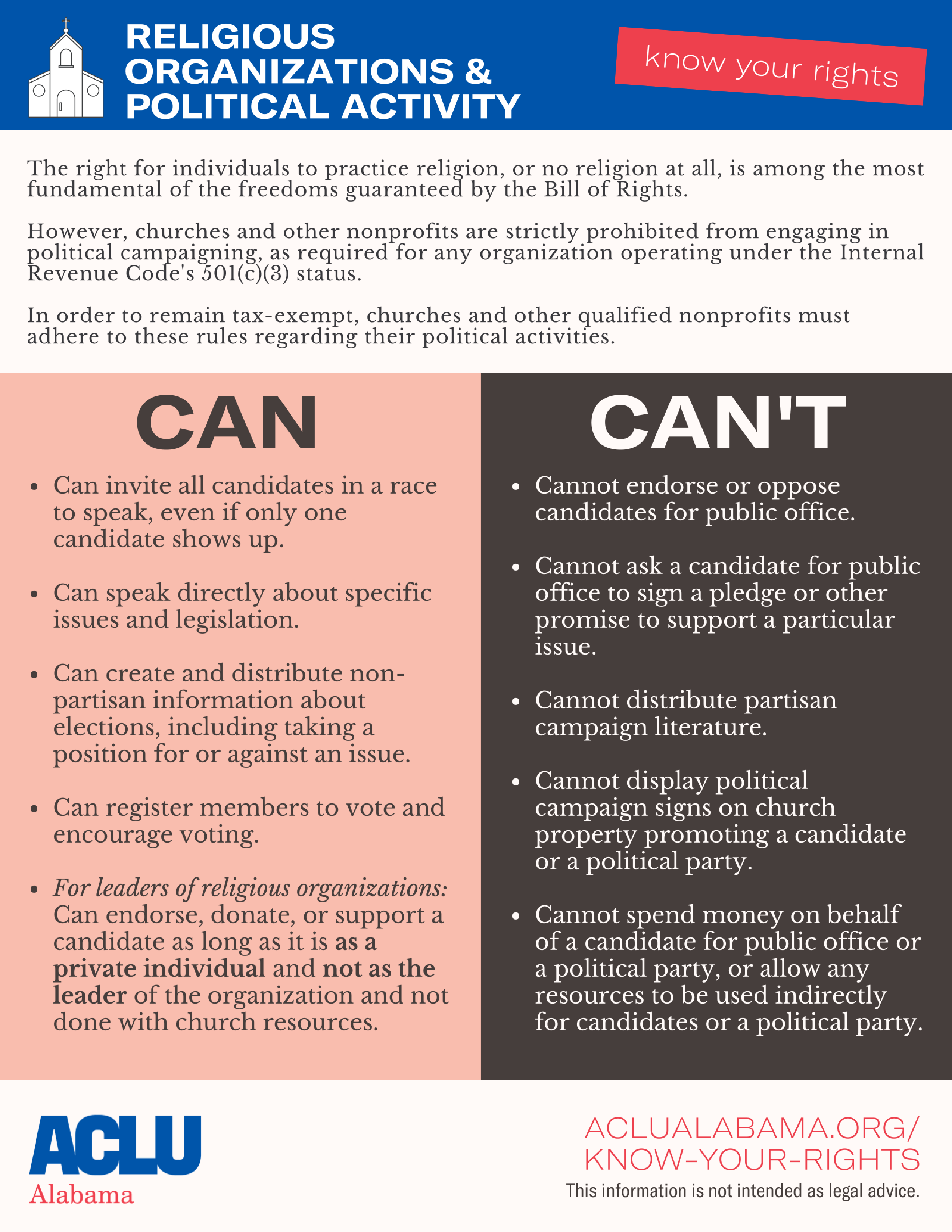
Meanwhile, many Catholic bishops have spoken out against aspects of Donald Trump’s presidency (including his immigration policies). While it is still technically illegal for churches to endorse candidates or participate in political rallies, many do so without getting caught.
The Case For Churches Being Political
There has been a lot of talk about churches being political lately. Some people are saying that this is what churches are supposed to do, while others feel that this is a dangerous trend.
It is important to first understand what the Bible says about church and politics. The Bible teaches that Christians should obey their government (Ecclesiastes 3:1-8), but they should also be willing to speak out against injustice (Isaiah 1:12-17). In other words, churches can be both political and moral entities at the same time.
Some people worry that churches will start advocating for specific causes. However, this shouldn’t be the case. Churches should focus on preaching forgiveness and love rather than promoting specific ideologies or policies. Additionally, it’s important to keep in mind that not all Christians agree with every cause that their government advocates for.
Churches shouldn’t try to force their beliefs on others in order to curry favor with the government. In conclusion, there are many benefits to churches being political. They can preach tolerance and understanding while also working towards change through peaceful means.
The Case Against Churches Being Political
There is a belief among some that churches should not be political. This belief is based on the idea that politics and religion are incompatible, and that religion should focus on matters of spirituality instead of worldly affairs. While this view may have been valid in the past, it is no longer the case.
Today, churches have a responsibility to engage with politics and public policy. In fact, there are many churches across the United States who are actively involved in politics and public policy debates. For example, the United Church of Christ has a long history of advocating for social justice issues such as reproductive rights, immigration reform, and civil rights.
Additionally, many Protestant denominations are active in lobbying for policies that they believe will improve society. There are a number of benefits to churches being political. First, churches can provide valuable perspective on issues that are important to their members.
Second, they can raise awareness about important political topics and encourage their members to get involved in the debate. Third, churches can play an important role in building bridges between different communities and faiths. Finally, engaging in political activity can help religious organizations build trust with government officials and other stakeholders.
History Of The Church
The Church of Jesus Christ of Latter-day Saints (LDS or Mormon Church) was established in 1830 by Joseph Smith. The LDS Church is a Christian denomination that follows the teachings of Jesus Christ. In addition to its religious teachings, the LDS Church also has a strong political presence.
The LDS Church has always had a strong political presence. As early as 1833, church leaders began sending out missionaries to proselyte new members and expand the church’s influence. One of the first missions sent out was to New York City, which was then part of the United States. At this time, New York City was controlled by Catholic priests and officials.
The goal of the missionaries was to convert Catholics to Mormonism and gain control over New York City so that the church could spread its message throughout the United States. Although some Catholics did convert to Mormonism, most remained loyal to their Catholic beliefs. This led to open conflict between Mormons and Catholics in New York City. In 1841, an incident took place that demonstrated Mormon ambitions for political power.
A group of Mormons attacked a Catholic priest who had been preaching against Mormonism in front of his congregation. The attack left the priest injured and led to public outcry against Mormonism in New York City. Despite these setbacks, the LDS Church continued to grow in popularity thanks in part to Joseph Smith’s charisma and charisma-driven movements such as polygamy (a practice wherein men can have multiple wives). By 1887, there were reportedly over one million.
Role Of The Church In Politics
The role of the church in politics has been a topic of debate for centuries. Some argue that the church should stay out of the political arena because it could be seen as interfering in secular affairs. Others believe that the church can have a positive impact on politics by educating its members about the importance of democracy and advocating for social justice. Ultimately, it is up to each individual church to decide how active it wants to be in politics.
Can Churches Be Political?
Political activity by churches is nothing new. In fact, some argue that the very roots of Christianity are political in nature. Early Christians were persecuted and had to flee their homes for fear of being killed because they refused to worship Roman gods.
So it isn’t too surprising that churches have often used their spiritual power to advocate for social causes and push for change. Today, many churches are still involved in social justice work. They advocate for policies that help marginalized groups, such as immigrants and refugees, economically disadvantaged people, and those living in poverty.
Churches also support policies that protect the environment and promote human rights. Some argue that churches should avoid politics because they are not independent institutions. However, this is not always the case.
Many Protestant denominations are officially neutral on issues such as abortion and same-sex marriage, but most member churches take a position on these issues. In addition, many denominations have branches that engage in political activism on behalf of particular causes or candidates. So overall, it seems that religious organizations can be politically active – as long as they stay within the confines of the law.
Ultimately, whether or not churches can be political is a matter of interpretation and opinion. What some people see as political, others may not; likewise, what some churches view as political, other churches might not. That being said, there are certain principles that all Christians should stand for – such as love and compassion – regardless of their political views. So long as churches remain true to these core values, it’s hard to see how they could be considered anything but politically neutral.


 Churchreaders