 Churchreaders
Politics is a complicated topic, and churches are no exception. On the one hand, churches should be preaching about love and unity. On the other hand, they should be endorsing political candidates who share their religious beliefs. The problem is that many churches have not always been clear about which candidates they are endorsing.
This has caused some tension between church goers and their religious leaders. In this article, we will explore how churches can avoid this tension by being more clear about which candidates they are endorsing. We will also provide some tips for how to deal with difficult conversations about politics in a church setting.
Can Churches Endorse Political Candidates?
Many churches have taken a stance on political candidates and the issues they stand for. Some denominations, like the Methodist Church, have strict guidelines about endorsing any candidate. Others, like the United Methodist Church, allow their pastors some discretion in who to endorse.
The Southern Baptist Convention has a position on political endorsements that is unique among religious organizations. Their official statement reads: “Our policy is not to endorse candidates for public office.” This policy was put into place in response to an endorsement of segregation by the denomination’s then president, Roy Wilkins.
Some churches do not take a stance on political endorsements, while others only endorse candidates who align with their theological beliefs or social justice causes. There is no one right answer when it comes to church endorsements; it all depends on the church’s individual policies and Guidelines.
The Risks Of Church Endorsing Political Candidates
There is a lot of debate surrounding the role of churches in politics, but one thing that is certain is that churches can endorse political candidates. While endorsements may be seen as a way to curry favor with voters, there are a number of risks associated with church endorsements.
The first risk is that church endorsements can backfire. If a candidate does not reflect positively on the church, its members may switch their support to another candidate. Furthermore, if the church endorses a candidate who ends up losing, they may feel dishonored and disillusioned with the institution. Finally, church endorsements can create divisions within congregations and lead to schismatic behavior.
The second risk is that church endorsements can actually harm the candidates they are supporting. A campaign rally or advertisement featuring a religious figure can give an unwarranted boost to a candidate’s ego and cause them to make unwise decisions. Furthermore, devout religious people often display unusually orthodox views on issues like taxation and abortion which can alienate other voters.
The third risk is that churches endorse candidates who do not share their values or beliefs. This can result in discord between members of the congregation and undermine the Church’s reputation within the community. In some cases, this has even led to violence towards religious leaders by groups opposed to their endorsement of particular candidates.
All in all, there are many risks associated with church endorsements and it is important for pastors to weigh these considerations before making any decisions.
Pros And Cons Of Church Endorsing Political Candidates
There are pros and cons to churches endorsing political candidates. On the pro side, endorsement can increase a candidate’s visibility and encourage more people to vote for them. Churches also have a large pool of potential voters who they can reach out to, which can be especially important in low-turnout elections.
However, endorsements can also backfire if they’re seen as too political or preferential. This could alienate some churchgoers who don’t agree with the endorsement and make it harder for the candidate to win over undecided voters. Furthermore, some churches may not have enough influence to affect the general election outcome, so their endorsement may not make much difference overall.
Background On Churches And Political Endorsement
Churches have a long history of endorsing political candidates. In the United States, churches have endorsed candidates dating back to the 1800s. In most cases, churches endorse candidates based on their theology or religious beliefs.
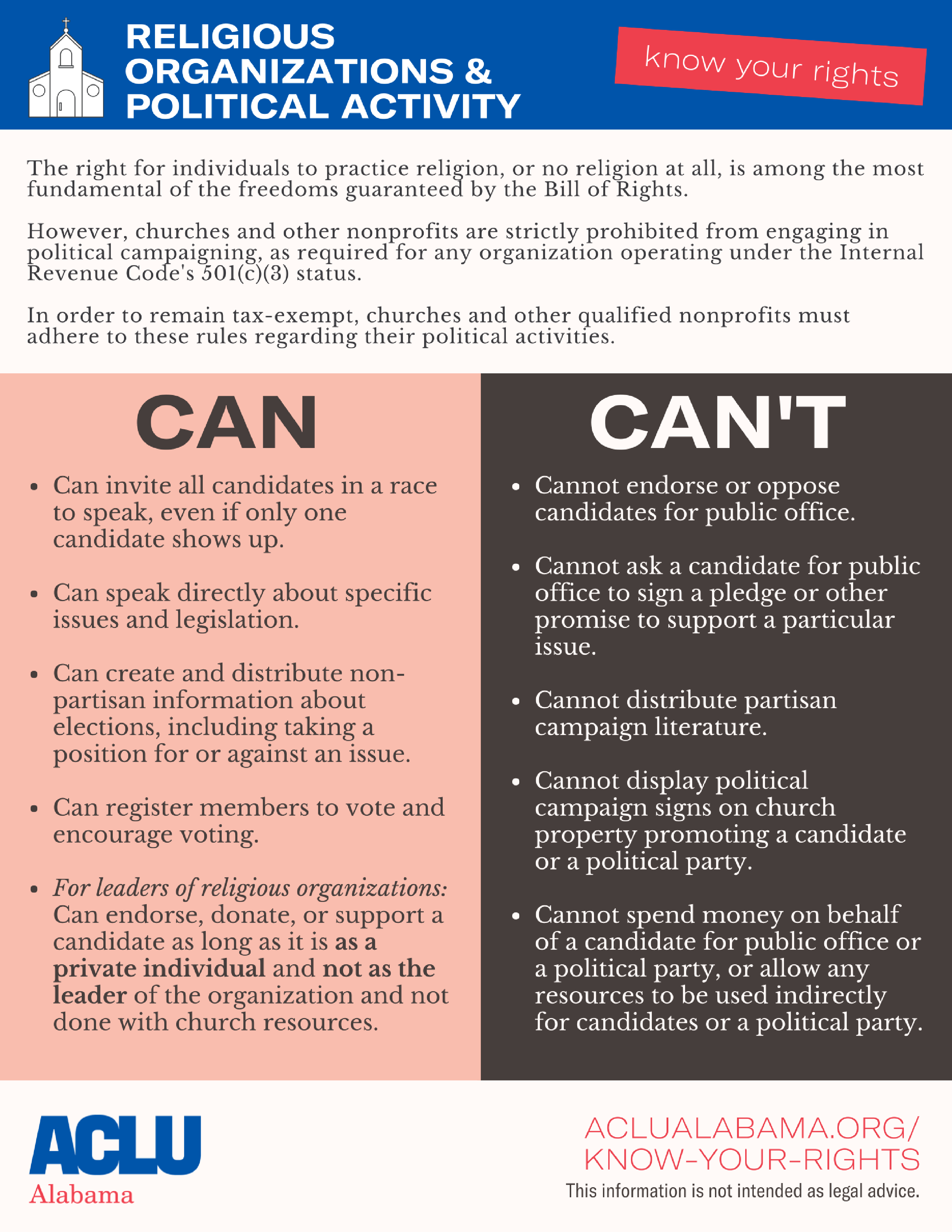
However, there have been instances where churches have endorsed political candidates who do not share their religious beliefs. Churches are allowed to endorse political candidates because they are considered 501(c)(3) organizations tax exempt under section 501 of the Internal Revenue Code. Some people argue that churches should not be allowed to endorse political candidates because it could create a conflict of interest.
However, the IRS has ruled that churches can endorse political candidates as long as they don’t take any financial benefits from doing so. Churches are also allowed to spend money on lobbying and advertising in support of their endorsed candidate.
Are Churches Bound By The Constitution To Stay Neutral On Political Matters?
The First Amendment of the Constitution protects religious liberty, and it is generally understood that churches are exempt from compliance with some provisions of the amendment. However, there is no clear answer as to whether churches are obligated to stay neutral on political matters.
There is a long-standing tradition that churches should remain politically neutral. This position is based on the premise that politics should be left to the government, which is better suited to handle such issues. This view has been reinforced by Supreme Court rulings in recent years which have upheld church-state separation.
However, some argue that this neutrality ought to extend only to matters of worship and doctrine, not to matters of public policy. They point out that the Bible contains many references to public affairs, and therefore it would be inconsistent for churches not to engage in political discourse. Others feel that neutrality is not always possible or desirable, and that it can lead to divisions within communities.
Theological Arguments For And Against Church Endorsing Political Candidates
There are theological arguments for and against church endorsing political candidates. Some people argue that church endorsement sends the wrong message to the public, while others believe that it is important for churches to have a voice in politics.
Some theologians believe that endorsing political candidates sends the wrong message to the public. They believe that by endorsing certain politicians, churches are actually helping to legitimize corruption and bad behavior. Churches should instead be using their resources to encourage moral behavior among their members and the community as a whole.
Others believe that it is important for churches to have a voice in politics. They argue that by endorsing certain politicians, churches can help to shape public opinion and create change. Churches can also use their influence to raise awareness about important issues, which could lead to positive change in society.
Practical Considerations For Churches Supporting Political Candidates
When churches endorse political candidates, they are often meeting a need in their community. Churches may feel that endorsing a candidate is the most effective way to communicate their values and beliefs to their members.
However, before endorsing a candidate, churches should consider the following practical considerations:
–The Church’s Mission: What is the church’s mission? Does it want to promote partisan politics or does it want to be a voice for Christ in society? If the church wants to promote partisan politics, then it should carefully weigh how endorsements might further its mission.
–The Church’s Political Views: All churches have some political views. Does the church have positions on certain issues that would be compromised if it endorsed a particular candidate? For example, if the church believes that life begins at conception and opposes abortion, then it would not be appropriate for the church to endorse a candidate who supported abortion rights.
–Membership and Beliefs: Do all members of the church support endorsing candidates? Are there any members of the church with different beliefs on this issue? If so, how will those members be represented in endorsement decisions?
-Church Resources and Influence: The church may not have enough resources to directly promote one candidate over another. In addition, endorsements can give a candidate an unfair advantage over other candidates. For these reasons, the church should carefully weigh how much influence endorsements will have on its membership and how much resources will be needed
In conclusion, churches can endorse political candidates, but they must be careful to stay within the bounds of their constitutional rights. Candidates and churches should work together to ensure that endorsements are not coercive or partisan in nature. Additionally, churches should make sure their endorsements do not violate state or federal law.

 Churchreaders